you are not alone
chronic low back pain is very common
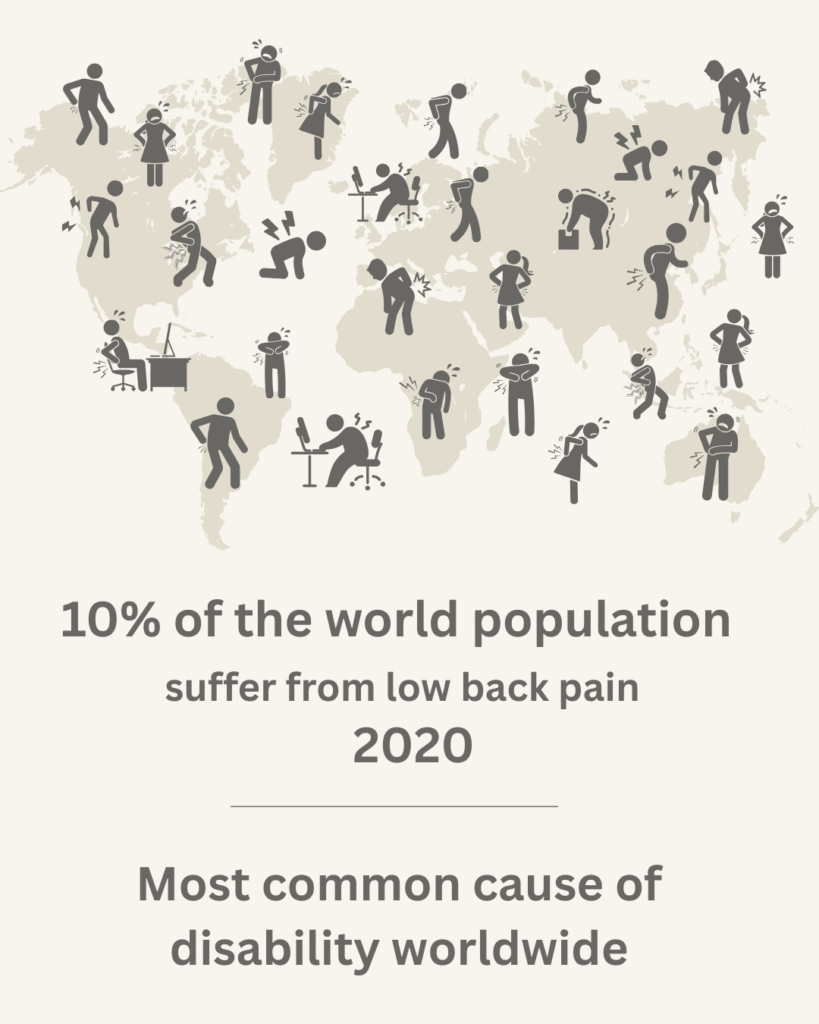
Around 4 in 10 adults will have it at some point in their lives. In 2020, more than half a billion people worldwide were living with low back pain.
For many, it doesn’t just go away — about a third of people still have pain a year after it starts.
It’s not just common — it’s the number one cause of disability around the world and one of the top reasons people visit their doctor. And yet, even with all the treatments available, most people only get modest relief.
In most cases (around 80–90%), doctors can’t find a clear cause on scans or tests. That doesn’t mean the pain isn’t real — it just means there’s no obvious injury or damage to explain it.
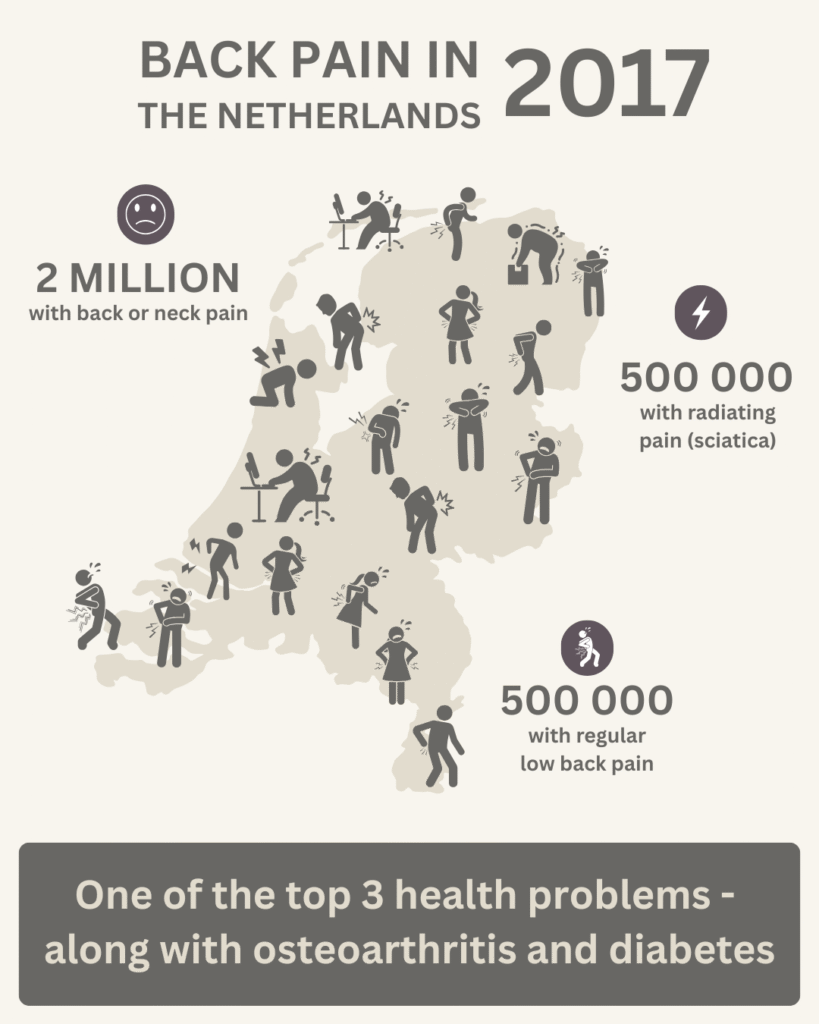
In the Netherlands, millions of people visit their doctor every year because of neck or back pain. In 2017 alone, more than 2 million people were registered with these problems.
About half a million had back pain with pain spreading down the leg (sciatica), and over half a million had low back pain without that kind of radiation. Each year, hundreds of thousands of new cases are added.
Back pain is one of the top three most common health problems in the country — along with osteoarthritis and diabetes — and that’s not likely to change anytime soon.
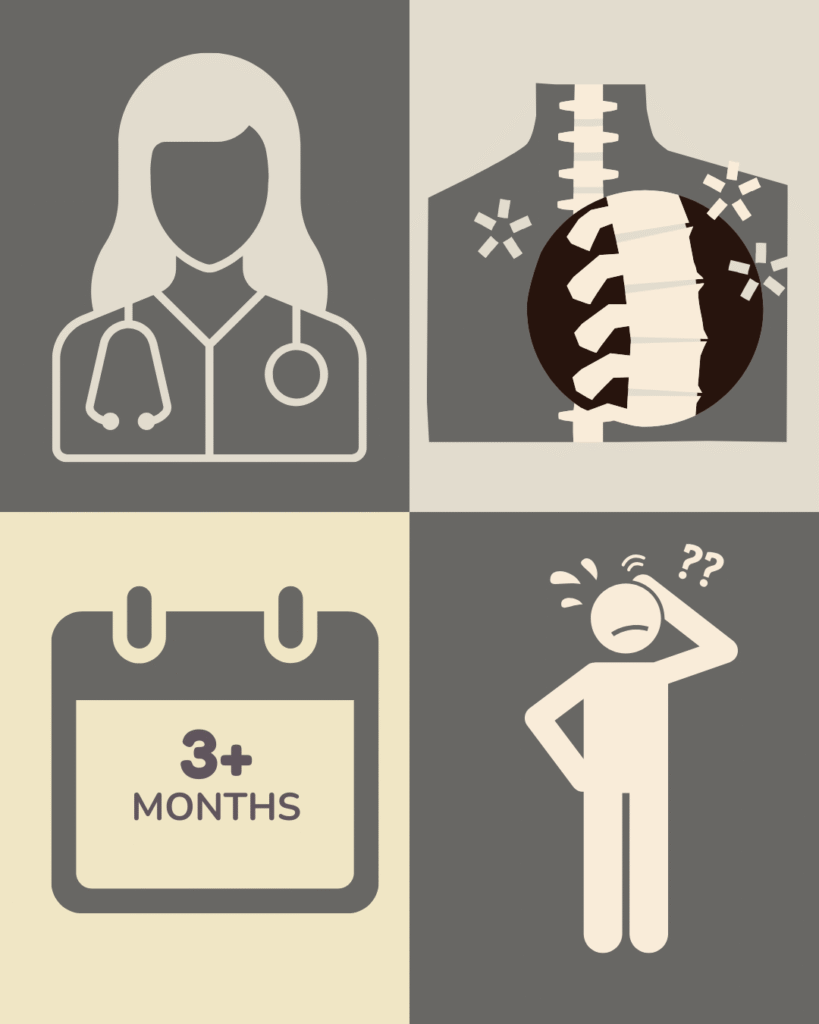
When you see a doctor for back pain, their first step is to understand how serious the problem is, where the pain is (with or without pain in the leg), how it affects your daily life, and how you move.
If the pain goes down your leg, the doctor checks whether there are signs of something more serious. But most of the time, tests like scans don’t show a clear cause — even when the pain is strong.
If back or leg pain continues (even after surgery) and no cause is found by a specialist, your GP treats it as non-specific back pain or chronic pain when it lasts longer than 3 months.
At this point, you might hear things like:
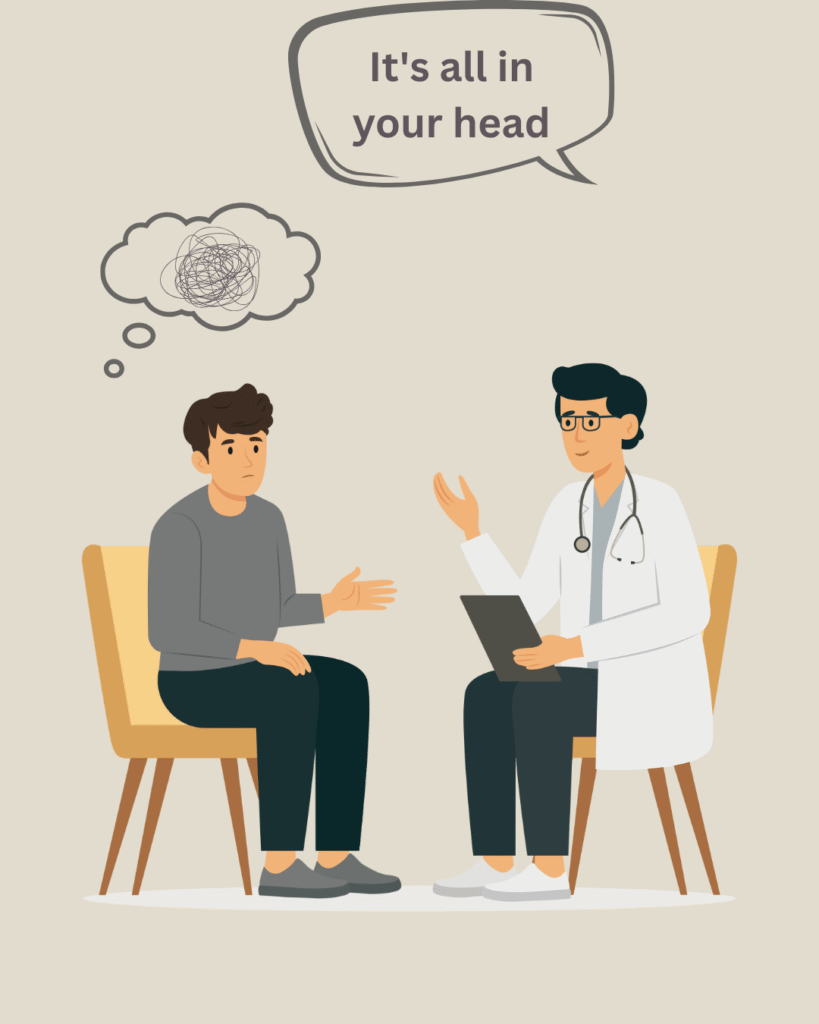
“It’s all in your head.”
“You’re just stressed.”
“Your scan looks fine.”
“Try to keep moving.”
“Maybe it’s time to see a psychologist.”
It can feel frustrating — like your pain is being dismissed or your doctor isn’t listening. But in most cases, that’s not true. Your doctor does care and takes your pain seriously — they just might not have the right words to explain what’s really going on.